

Verona in marble is a story that has nothing to do with a trade fair.
Every September, Verona becomes the center of the international natural stone conversation. But you don’t need Marmomac to understand why this city has such a strong connection to stone.
Walk through Verona and you’ll find centuries of natural stone in its streets, monuments, churches, bridges, and public spaces. The city itself is a reminder of what happens when a material is built to last.
If you’re travelling to Marmomac 2026 this year, set aside an afternoon to experience that history for yourself.
The Arena: A Lesson in Longevity
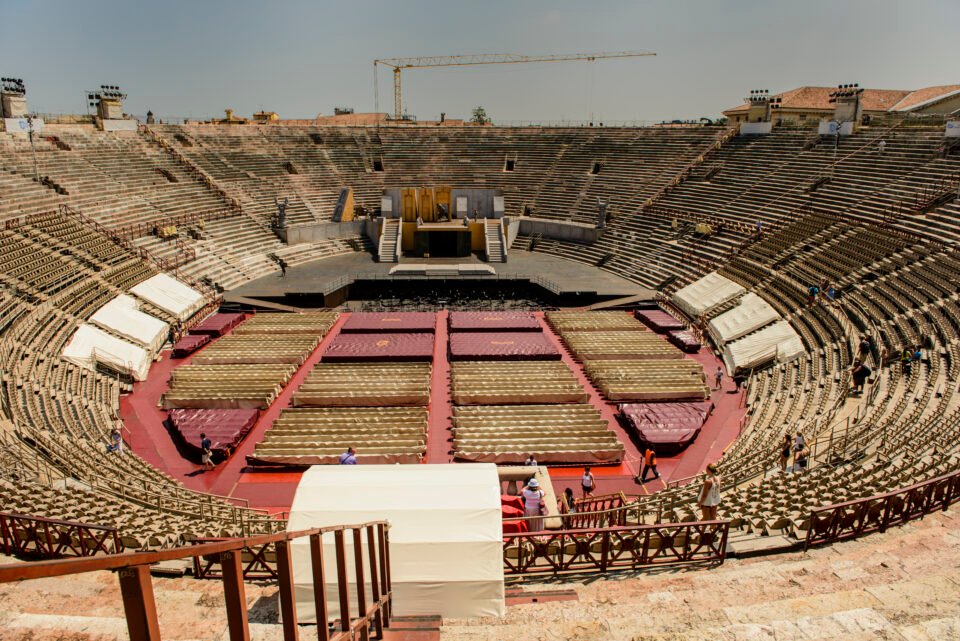
The Verona Arena is one of the clearest examples of what natural stone can become over time.
The Romans built this amphitheater nearly two thousand years ago, and it still stands, still hosting audiences almost every summer. You can read technical specifications about compressive strength, durability, and weather resistance, or you can stand inside a structure that has survived centuries of use. The Arena’s own history makes that argument better than any spec sheet.
Piazza delle Erbe and Palazzo Maffei
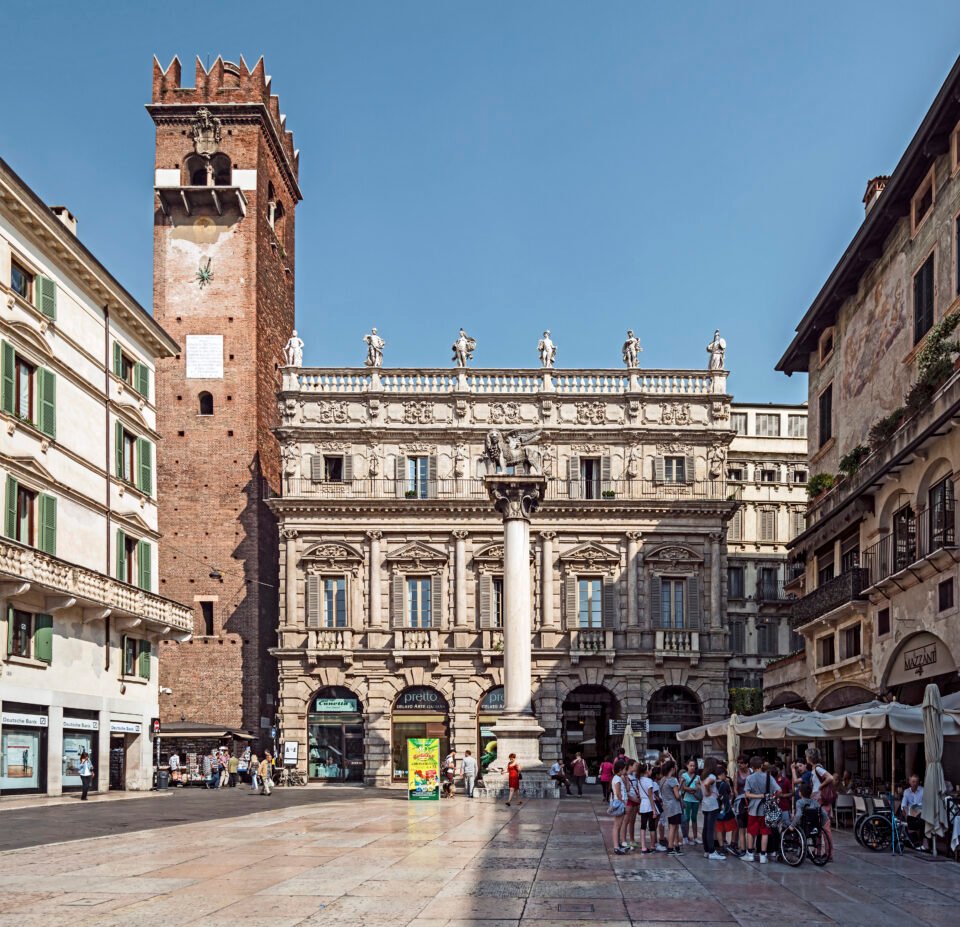
Piazza delle Erbe occupies the site of Verona’s former Roman forum, surrounded by architecture shaped and reshaped across centuries.
Look closely and you’ll see stone being reused, adapted, repaired, and incorporated into different architectural periods, a pattern Verona’s official tourism guide documents in detail.
It’s a useful reminder for anyone specifying materials today: natural stone doesn’t simply belong to the moment it is installed. It becomes part of the history of a building.
Ponte Pietra and Verona’s Warm Palette
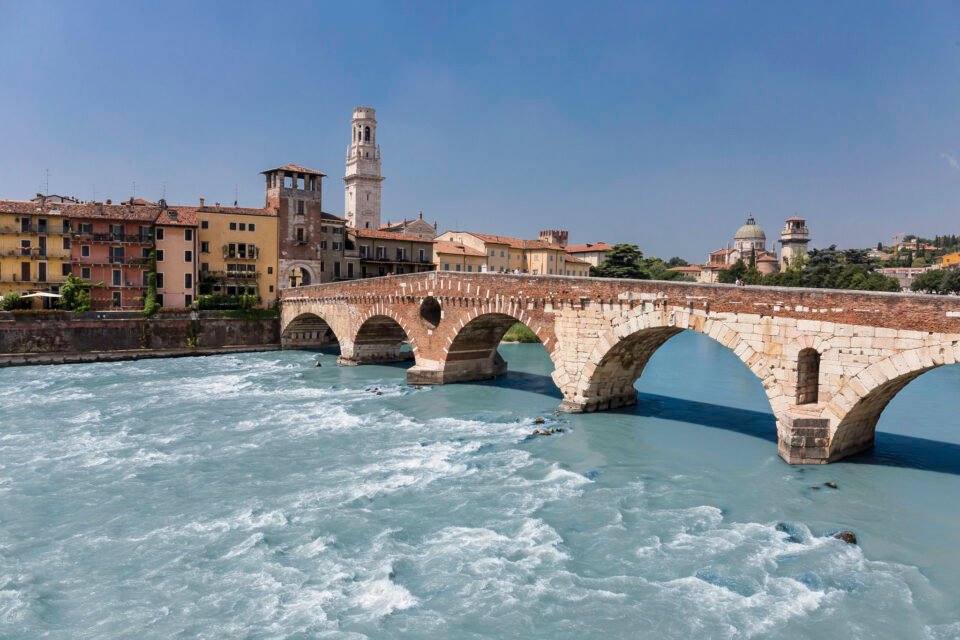
Ponte Pietra offers another lesson in the relationship between material and place.
Builders reconstructed the bridge after the Second World War using the original salvaged stone wherever they could recover it. Its warm tones become particularly striking in the late afternoon, when the changing light alters the way the stone reads.
The same principle matters in contemporary interiors. A material’s appearance is never completely separate from the light surrounding it, something worth remembering the next time you’re choosing a stone for a project based on a sample photo alone.
San Zeno Maggiore
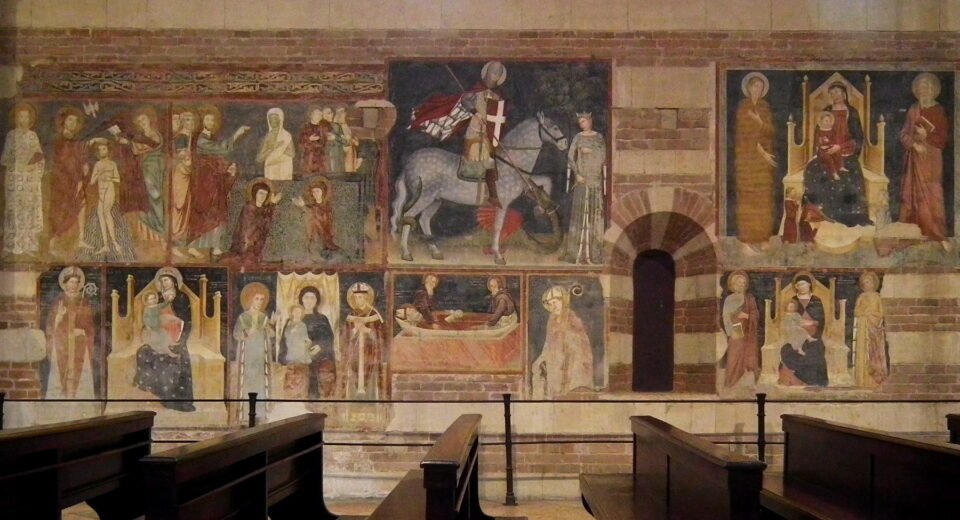
For anyone interested in carving and craftsmanship, Basilica di San Zeno Maggiore deserves a place on the itinerary.
Its marble and bronze doors carry intricate historic work that remains legible centuries after craftsmen created it. It demonstrates something that is easy to forget in an age of rapid construction: a well-selected stone can outlast the design trend surrounding it.
Verona in Marble: A Few Hours That Change How You See the Fair
Marmomac is about the future of stone. Verona offers a reminder of its past.
Seeing both within the same trip creates a useful perspective. New technologies may change how stone is cut, finished, engineered, and applied, but the fundamental appeal of the material remains remarkably constant.
If you’re coming to Marmomac 2026, book a meeting with Sarhan while you’re planning your Verona itinerary, or browse our marble range beforehand if any of these landmarks put you in the mood for it.
 English (UK)
  Français
  Español